
Cat Training for Beginners: A Free 7-Day Starter Plan
You do not need to be a professional trainer to teach a cat. You need one comfortable setting, a reward your cat actually likes and a first action so small that success is possible.
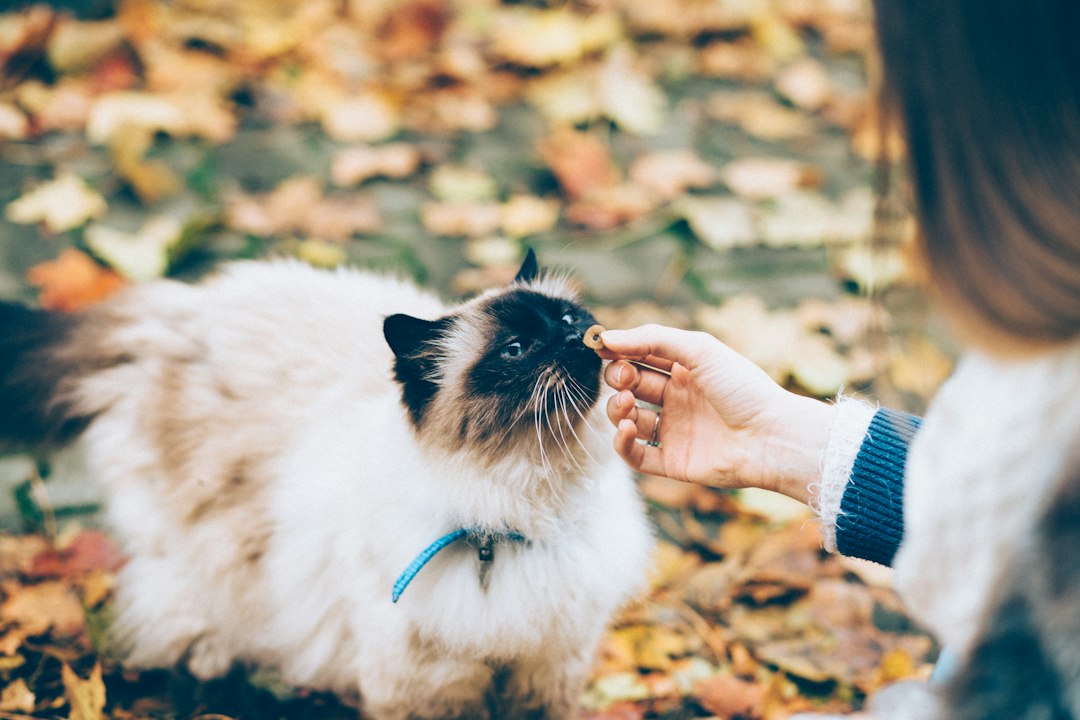
Start here: This free seven-day plan focuses on how to practice, not how quickly a cat must perform. Each day offers a tiny optional exercise. Repeat a previous day's activity or take a day off whenever your cat needs it. For the general theory, read How to Train a Cat; this article is the practical weekly schedule.
Cats can learn from positive reinforcement: something pleasant follows an action, making that action easier to repeat. In training, the cat should choose to participate and should always be free to leave.
Before day one: prepare your cat training kit
Choose a quiet familiar room with a non-slip surface. Put away hazards such as dangling cords or fragile objects. Keep another pet in a separate safe space if competition would distract your trainee.
For rewards, try a small portion of your cat's usual food, a cat-safe treat approved for its diet, a brief wand-toy interaction or gentle attention if the cat enjoys it. Ask your veterinarian about dietary restrictions. Rewards should be small, timely and something the cat chooses to work for.
You can use a clicker, but a consistent short word such as “yes” can also mark the exact moment. If a click sound startles your cat, do not insist on using it. Have an easy exit route and a note-taking method ready. A phone, paper journal or Meawys lesson tracker is enough.
Day 1: let your cat choose to join
Do not begin with a command. Sit in a relaxed position and allow your cat to approach. Reward one voluntary step toward your training area, a look in your direction or a comfortable interaction with the reward. Avoid reaching for a cat who is resting, hiding or backing away.
Goal: discover what reward your cat likes and what relaxed participation looks like. A cat that chooses not to come has not failed the session. Put the supplies away and try another suitable moment.
Log: record the time, reward used and whether your cat approached easily. If your cat has recently become inactive or unwilling to move, ask your veterinarian to rule out discomfort before treating it as disobedience.
Day 2: introduce a reward marker
When your cat is comfortably nearby, say a brief marker word or click once, then immediately present a small reward. Repeat a few times without asking for a particular trick. The aim is simply for the sound to predict something pleasant.
Goal: your cat can experience the sequence calmly. Avoid rapid-fire clicking, which may be confusing. It is not necessary to get a dramatic reaction or complete a preset number of repetitions.
Read our detailed cat clicker training guide if you want guidance on selecting a marker. The tool is optional; the timing of the reward is what makes the exercise useful.
Day 3: teach an easy nose target
Offer a target such as a suitable target stick at a comfortable distance without pushing it toward your cat's face. Mark and reward your cat for looking toward it or moving voluntarily closer. Later, if your cat is confident, reward a gentle nose touch.
Goal: create an easily observed action. You may remain at “look at the target” for several sessions. Do not force your cat to stretch, jump or reach into a corner to touch the target.
A nose target becomes useful later for cooperative care, calmly moving toward a carrier or following a hand through a familiar room. See target training for cats for the longer progression.
Day 4: practice name response without demanding it
Say your cat's name once in a gentle, consistent tone when it is nearby and not already occupied. If it turns its head or looks at you, mark and reward that small response. If the cat does not respond, make the setting easier rather than repeating the name louder.
Goal: build a positive association between the name and attention. A name is not a punishment cue, and it should not always predict an unwanted activity like being pulled from a hiding place.
Try this in one familiar room first. Later, add tiny distractions only if your cat is ready. Our come-when-called guide covers the next stage without rushing recall.
Day 5: teach a comfortable resting spot
Place a mat or small bed where your cat already likes to rest. Mark and reward looking at, approaching or stepping onto it. If the cat settles, reward that too. Let the cat leave whenever it chooses.
Goal: introduce a voluntary station that can support calm routines. Do not carry your cat onto the mat or hold it in place. The mat should remain a safe, inviting surface rather than a requirement.
You can build duration and a cue gradually over future sessions. Find the full step-by-step method in our mat-training article.
Day 6: start one useful life skill
Choose a real-life problem with a small, safe entry point. For carrier confidence, place an open carrier in a familiar room and reward a look toward it. For scratching-post habits, reward your cat for investigating the post. For gentle paw handling, start with the cat voluntarily approaching your hand.
Goal: practice only the very first comfortable step. Don't trap your cat in a carrier, push its paws onto a scratcher or restrain it for grooming just to complete the schedule.
Connect today's exercise to the appropriate longer lesson: carrier training, scratching-post training or paw-touch practice.
Day 7: review the week without grading your cat
Look at your notes. Which exercises drew willing participation? What time of day worked? Did one reward help more than another? Select one tiny goal to repeat next week, and consider whether your cat seemed relaxed and interested.
Goal: write a practical next-step sentence such as: “Continue rewarding a look toward the open carrier in the quiet bedroom.” Progress is not measured by learning seven tricks in seven days.
For a flexible schedule, try the Meawys free cat training plan generator. You can also follow the free step-by-step lessons described in the Meawys app listing. Live trainer chat is a separate Premium benefit.
Beginner mistakes and useful fixes
| Problem | Better next step |
|---|---|
| Cat walks away | End the session and try a shorter, easier setup later |
| Reward is ignored | Check comfort, reward preference and timing |
| Cat startles at the clicker | Use a gentler marker word or reward directly |
| Cat only performs when a treat is visible | Improve marker and reward timing, then gradually hide the lure |
| Training causes fear or aggression | Stop; consider veterinary and qualified behavior support |
A session does not need to last five full minutes. Brief, voluntary practice is better than pushing through fear or fatigue.
Cat training for beginners: FAQs
Can an adult cat be trained?
Yes. Cats can learn throughout life. Older cats may need exercises adapted for comfort, movement and any medical conditions.
How long does it take to train a cat?
There is no universal number of days. A first target touch and a comfortable carrier routine are different skills, and the cat's prior experiences matter.
Do I need a cat training app?
No. Clear instructions, kind rewards and a simple log are enough to start. An app can make lesson sequences and progress easier to organize.
Does Meawys have free beginner lessons?
Yes. The official app description lists free step-by-step training lessons. Chat with real trainers is a Premium feature.
Related articles: Free cat training lessons online · Free cat training apps · Your first cat training session
Sources and further reading: Feline Veterinary Medical Association: positive reinforcement training toolkit · FelineVMA: Setting Up the Environment for Success · Meawys: official App Store listing. Photo: freestocks / Unsplash. This article provides general educational information and does not replace veterinary diagnosis or emergency care.