
Training an Older Cat: Gentle Exercises and Tips
Older cats can learn and maintain rewarding routines. The goal is to choose comfortable movements and respect changes in energy, mobility, senses and health.
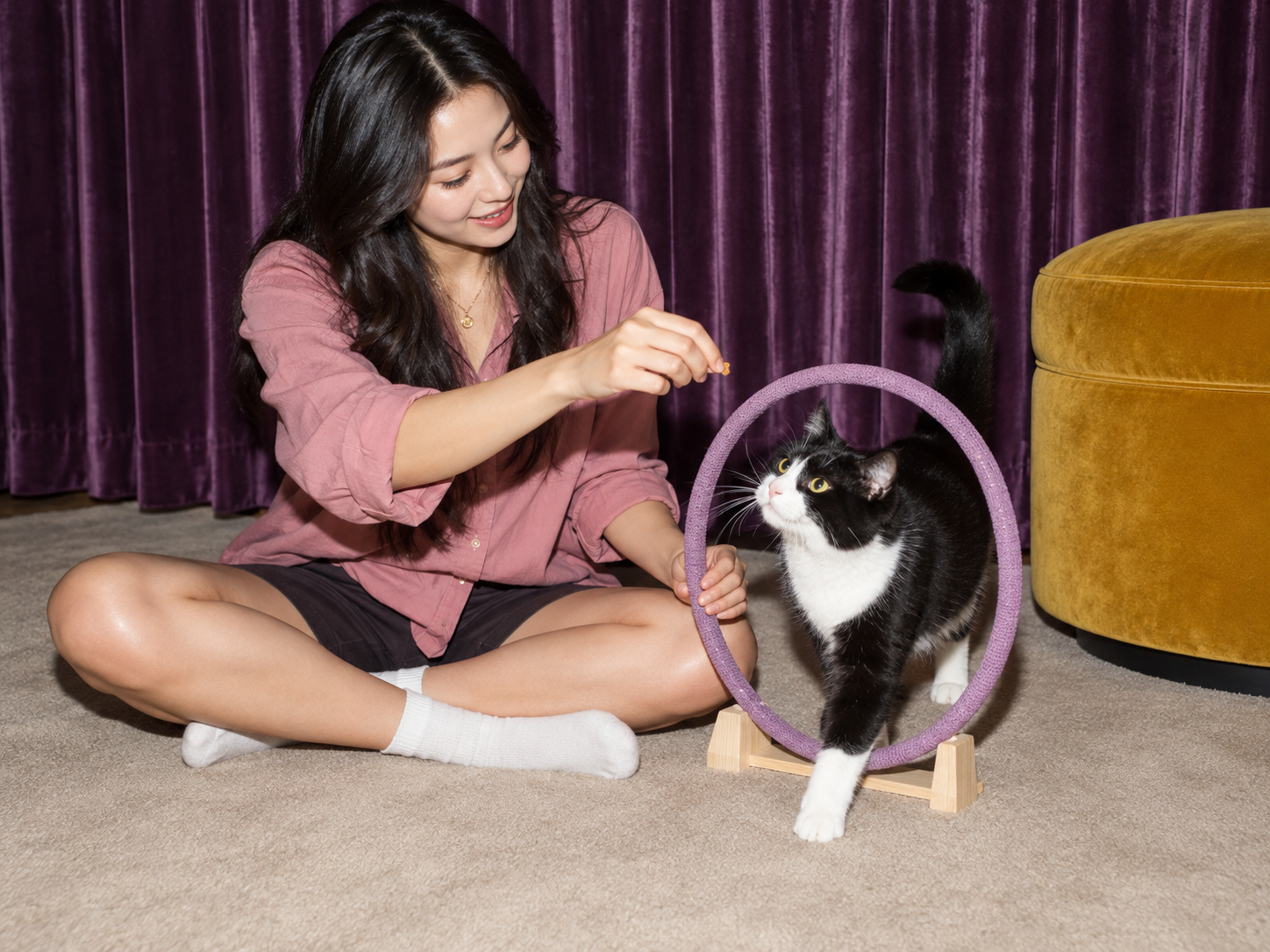
Before you begin
Use a non-slip, familiar surface and a reward your cat can comfortably enjoy. Avoid high jumps, tight turns or demanding postures until you're sure they're appropriate.
Step-by-step training
Observe what your cat already does comfortably, such as approaching a mat or following a hand with their eyes.
Reward a small voluntary action and keep early sessions brief.
Choose practical skills like stepping onto a low mat, approaching for a reward or becoming comfortable with a carrier.
Keep cues and room layout consistent, especially if hearing or sight has changed.
Repeat at the cat's pace and celebrate reliable easy behaviors rather than escalating difficulty.
If progress slows
New reluctance to jump, touch sensitivity or withdrawal may reflect pain or a medical issue rather than training refusal. Consult your veterinarian before pushing physical exercises.
How to track progress
Successful training may look like a calm voluntary step toward the mat, not a flashy new trick. Comfort is part of the goal.
Use the free 7-day training plan generator to organize age-appropriate practice. A good schedule is flexible: repeat a simpler step rather than forcing progress just to complete a calendar.
Frequently asked question
Is my cat too old to learn?
Age alone does not rule out learning. Choose rewarding, accessible exercises suited to the individual cat's health and ability.
Related reading: Explore a connected Meawys guide. Sudden or serious behavior changes may need a veterinarian before training continues.
Adapt the task to comfortable movement
Choose a nonslip surface, an accessible resting position, and a reward suitable for the cat’s health and feeding plan. Begin with an easy familiar action rather than a jump or tight turn. Age alone does not prevent learning, but comfort affects participation.
Example and progress checks
Illustrative example: practice a reachable nose touch from a comfortable position, then pause. Record movement, interest, and recovery rather than repetitions alone. New reluctance, stiffness, sensory changes, or appetite changes warrant veterinary advice before increasing demands.
Keep learning with Meawys
Build a more consistent routine with guided cat-training lessons, a calendar, progress tracking and Premium access to real trainer chat.
See how Meawys worksFind another cat training answer
Educational content, not veterinary diagnosis. Consult your veterinarian about medical concerns.