
Gentle Kitten Handling for Vet Visits
A kitten who chooses to accept a gentle paw touch or brief ear check is learning an important life skill. Train those moments separately and always leave room to move away.
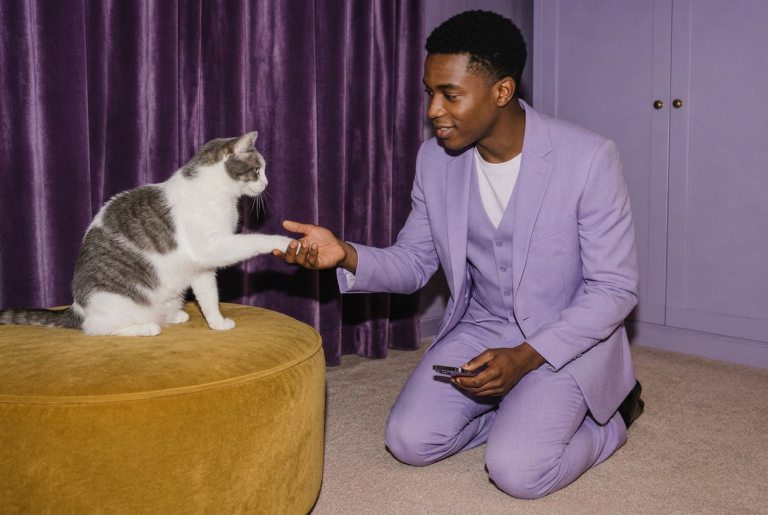
Find the kitten's comfort point
Choose a quiet moment when your kitten enjoys being near you. Start with an ordinary shoulder touch, reward, and move your hand away. Note how the kitten's body changes before attempting something harder. Loose posture and voluntary re-approach are a better guide than stillness alone.
Practice one body area at a time
Vet-related handling includes paws, ears, mouth and sometimes the sight of a towel. These are different experiences and should not be piled into one session.
- Briefly touch a shoulder or foreleg, then reward.
- When that is easy, touch one paw for a moment and release without gripping.
- Allow the kitten to investigate a towel or carrier without wrapping or confining them.
- Gradually build duration only when the kitten remains comfortable.
How to tell you're going too fast
Pulling away, flattened ears, tense muscles, swatting, or refusal to take a favorite reward may mean you crossed a threshold. Stop and return to an easier point at another time. Necessary medical restraint is a different issue and should be discussed with veterinary staff.
Begin with voluntary face and cheek touches. If an oral examination is needed, ask a veterinarian to show you safe methods rather than forcing the jaw open.
Keep learning
Cat Paw Touch Training →Preparing for a Cat-Friendly Vet Visit →Find another cat training answer
Search the Meawys library of 116 training guides, or explore more kitten training topics.
Explore all kitten training guides →Further reading: Kitten socialisation · Grooming your cat. Meawys offers educational training guidance, not veterinary diagnosis.