
Introducing Kittens to Children Safely
A calm relationship begins when children know how to give a kitten space. The goal is a kitten that chooses interaction and a child who understands when to stop.
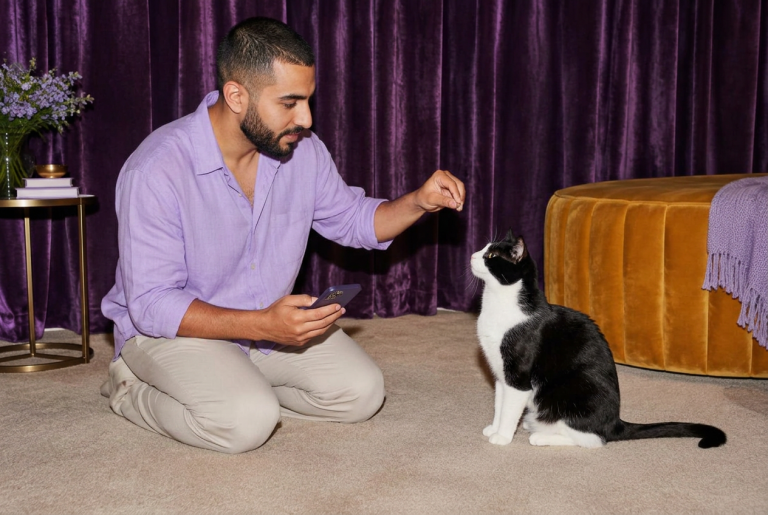
Agree on the household rules first
Explain that the kitten's bed, hiding spots, litter tray, and food area are off-limits for play. Children should not chase, pick up, corner or wake a kitten. An adult needs to supervise every early interaction, even when the child means well.
Start with quiet sitting and a shared game
Ask the child to sit while the kitten can move freely. A short wand-toy game gives both something enjoyable to do without hands becoming targets.
- Keep the toy away from faces and fingers.
- Let the kitten approach; don't carry it over for a photo.
- Stop before the child becomes excited or the kitten tries to escape.
- Reward the child's calm waiting and the kitten's voluntary approach.
Learn the signs that the kitten needs a break
A swishing tail, flattened ears, tense body, retreating, hiding or hissing are signals to give space. Teach the child to stop, put the toy down, and let the kitten reach a safe room. This is better than assuming a quiet kitten enjoys being held.
No. Explain that sleeping and hiding are private time. Interactions should happen when the kitten is awake and willing.
Keep learning
Teaching Children Cat Body Language →Kitten Socialization Without Stress →Find another cat training answer
Search the Meawys library of 116 training guides, or explore more kitten training topics.
Explore all kitten training guides →Further reading: Cats and children. Meawys offers educational training guidance, not veterinary diagnosis.