
How to Train a Shy Cat Without Pressure
Learning works better when a shy cat controls distance and can retreat safely.
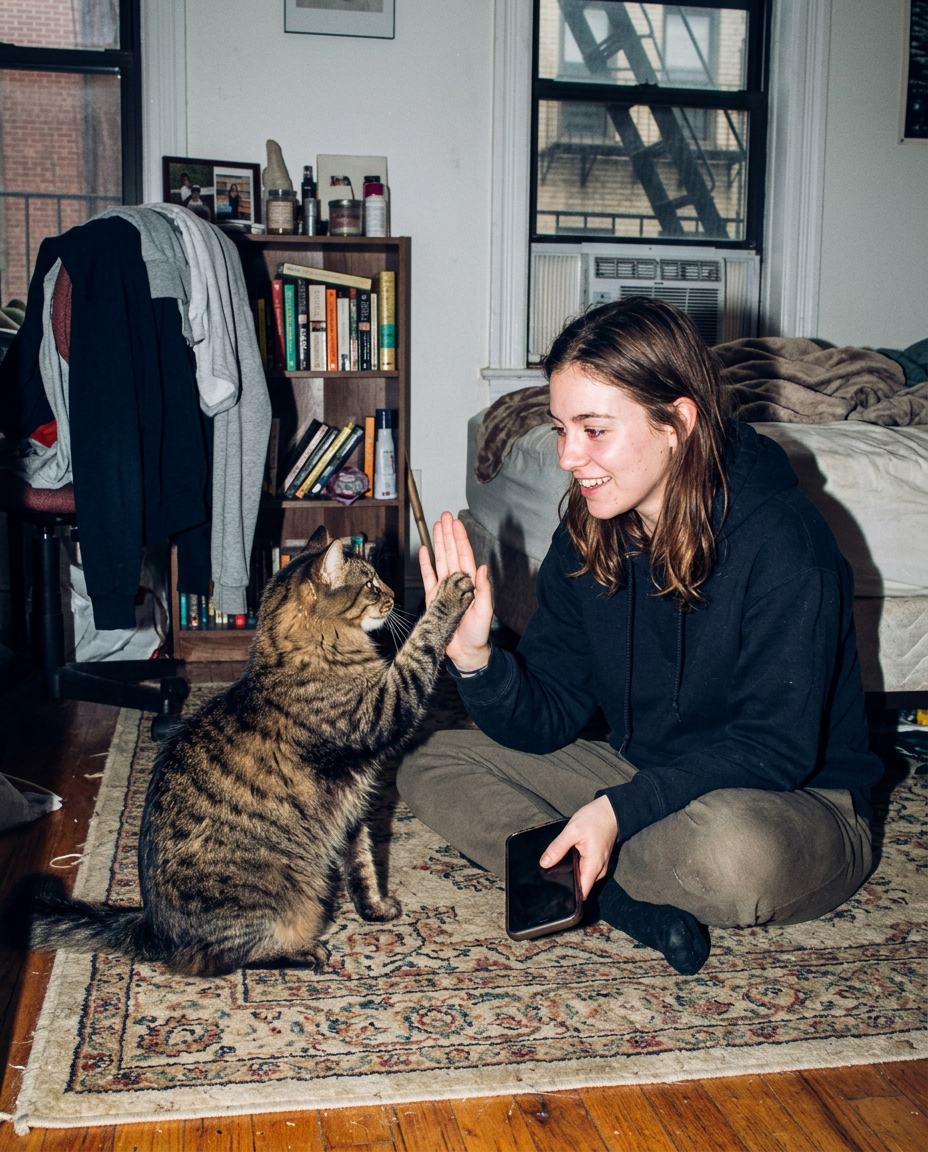
How shaping changes a cat's behavior one step at a time
Learning works better when a shy cat controls distance and can retreat safely. Training is a conversation with your cat, not a test of obedience. You will get more reliable results by noticing what the cat willingly offers and rewarding that moment.
Prepare hiding spots, familiar scents, a quiet room and easy resource access.
Have rewards within reach, remove distractions and leave an easy exit. A cat who can choose to participate is more likely to enjoy returning for the next session.
How shaping changes a cat's behavior one step at a time
If the cat hesitates, go back one stage. Repeat successes rather than trying to finish every stage in one day.
How shaping changes a cat's behavior one step at a time
Do not follow the cat into hiding or use hunger to force interaction.
How shaping changes a cat's behavior one step at a time
Write down the cue, the distance or setup, and the exact response that earned a reward. Begin the next session with that easy success. Add only one new challenge once your cat responds comfortably in the same environment.
Build a flexible routine with our free seven-day training plan, or compare Meawys's guided lessons and real-trainer support.
How shaping changes a cat's behavior one step at a time
Relaxed posture, voluntary approaches and shorter recovery after a sound can be meaningful improvements.
Find another cat training answer
Educational training guidance, not veterinary diagnosis. Sudden or concerning behavior changes deserve veterinary advice.