
How to handle play biting in cats
Cats need opportunities to stalk, chase, and catch. When play is directed at your hands or ankles, change how you play together.
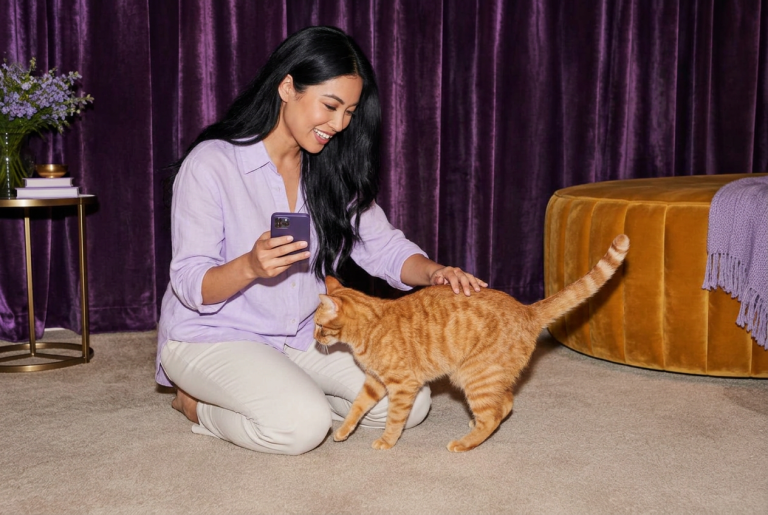
Why does my cat bite during play?
Start by noticing what happens immediately before teeth touch skin. Does your cat grab a moving hand, ambush your ankles as you pass, or bite after several minutes of fast play? These situations need different changes. A moving hand needs to leave the game; an ankle ambush needs a safer outlet before you walk past; a game that becomes rough needs an earlier, calmer finish.
Play biting and biting during petting are not interchangeable. If the bite follows stroking rather than a chase, use the separate guide to biting during petting. New or unusually intense biting, especially with discomfort or other behavior changes, deserves veterinary assessment.
What to do when teeth touch skin
- Stop making the body part into prey. Avoid fast pulling, finger wiggling or a wrestling response. Move out of the interaction calmly when it is safe.
- Pause the game. Do not shout, tap the nose or hold the mouth shut. Give your cat space to settle rather than turning the interruption into another chase.
- Restart with distance. When your cat is relaxed, use a suitable wand or another toy that keeps your skin away from the action.
- Change the next session. Start before the usual ambush time and stop before play becomes frantic. Repeating the same game and hoping for a softer bite gives your cat little new information.
If a bite breaks your skin, clean the wound and seek appropriate medical advice. The training exercise can wait.
A simple toy-play exercise
Illustrative practice: choose a clear patch of floor and move a wand toy away from your cat in small, prey-like movements. Allow a stalk, a chase and a successful catch. Pause while your cat investigates the toy instead of immediately snatching it away. Keep the toy away from your legs and hands throughout.
Finish while your cat can still disengage comfortably. Put string and wand toys away after supervised play. Use a suitable kicker toy for grabbing and hind-leg kicking; fingers under a blanket are still fingers, even when your kitten cannot see them.
For young cats, connect this practice with kitten hand-biting guidance and a stalk, chase and catch routine.
Troubleshoot the pattern you actually see
- Attacks happen when you walk past: keep an appropriate toy available before entering that area and plan play before the usual high-energy period.
- The cat abandons the toy for your hand: increase the space between your skin and the toy, and check whether your hand is moving more enticingly than the toy.
- Play gets rough near the end: note the earlier changes in pace or body tension and finish sooner next time.
- Different people get different results: agree that nobody uses hands or feet as toys. Consistent rules matter more than a special phrase after a bite.
Common questions about cat play biting
Will my kitten simply grow out of biting?
Do not rely on age alone. Practice the play habits you want an adult cat to use. This does not mean avoiding play; it means giving the kitten something appropriate to chase and catch.
Should I immediately offer a treat after a bite?
Avoid making biting the reliable first step in a reward routine. Plan rewarding toy play before trouble starts and reinforce the alternative behavior you want to see.
How do I measure progress?
Record when biting happened, the activity before it and the change you tried. Look for fewer skin-directed attempts and easier transitions to toys, rather than expecting one perfect session.
Further reading: Cats Protection: cats and play.
Meawys provides training guidance. These guides do not replace veterinary care.
Find another cat training answer
Educational training guidance, not veterinary diagnosis. Sudden or concerning changes deserve veterinary advice.